For organizations
I get AI adopted, so it becomes how the work gets done.Not another pilot.
Most organizations already bought the AI. What they're missing is people who are fluent with it. I run adoption the way I've run portfolios and programs for 10+ years: scoped, governed, and measured, and I build AI fluency inside your teams so the operating model stays with you, not me.
MSCIS (Boston University) · PMP · PMI-ACP · CSPO
What stalled AI adoption costs.And what I do instead.
| What I see | What it costs | What I do instead |
|---|---|---|
| Licenses bought, barely used | You pay for every seat while the work stays manual. | An adoption plan with usage goals for each team. |
| Pilots with no success measure | Nobody can say what worked, so nothing scales. | Every pilot gets a measure and an owner before it starts. |
| Shadow AI | People use personal accounts, and your data leaves without rules. | Approved tools and plain-English data rules. |
| No owner for AI work | Every team reinvents the same prompts and tools. | An operating model with named owners and shared playbooks. |
| Training once, then nothing | Skills fade and adoption stalls after launch. | An ongoing fluency program, not a one-off workshop. |
The AI Adoption Assessment
A few weeks to see where your organization stands: what is used, what is working, where the risk is, and the plan to scale what works.
What I've delivered
June 2025 to June 2026
Takeda Pharmaceuticals
Senior Digital Program Manager, Digital Data & Technology

- Led TakVisor, the flagship enterprise AI assistant, from MVP to production: 13,000+ employees across 25+ manufacturing sites in 5 regions.
- Cut document discovery time 70–90% (from 45+ minutes to under 5) and grew the knowledge base 290%.
- The TakVisor team was recognized with an AWS Digital Innovation Award (Enterprise Digital Innovation) at the AWS Life Sciences Symposium 2025. I led up to 12 AI engineers, data scientists, and UX designers across 3 sites.
2014 to 2025
Boston Medical Center
IT Portfolio Manager

- Eleven years at BMC, ending as IT Portfolio Manager and de facto Chief of Staff to the CIO, governing a $160M+ IT portfolio.
- The portfolio, program, project, and PMO work is broken out level by level below.
2022 to present
Boston University, Metropolitan College
Adjunct Professor, Administrative Sciences

- Designed one of the earliest AI-integrated project management graduate courses in the country.
- Co-author of The AI Revolution in Project Management (2023); contributor to PMI's Pushing the Limits (2024).
Project, program, product, and portfolio management
The discipline under everything I do. I've worked every level of it, from single projects to a nine-figure portfolio, and I teach it at the graduate level.
Portfolio
Choosing the right work and funding it
- $160M+
- annual IT spend governed
- 120+
- item portfolio
- 20+
- teams, 150+ staff
- Oversaw the EHR portfolio, the largest portfolio in IT, and governed Boston Medical Center's $160M+ annual IT spend (about $150M capital, $10–12M operating) across a 120+ item portfolio.
- Served as de facto Chief of Staff to the CIO and VP of Digital Strategy, across 20+ teams and 150+ staff.
Oversight areas
- Clinical
- Operating room
- Emergency department
- Physicians
- Regulatory
- Quality
- Community Connect
- Technical integrations
- Digital patient engagement
- Reporting and analytics
Revenue cycle
- Ambulatory
- Inpatient
- Nursing
- Pharmacy
- Revenue integrity
- Billing
Ancillary
- Imaging
- Lab
- The 'ologies
Program
Coordinating many projects toward one outcome
- $90M
- enterprise PI program
- 26
- IT projects behind it
- $79M
- a year, HQEIP
- Performance Improvement (PI) goals: coordinated the IT work behind BMC's $90M enterprise PI program, including 26 IT projects.
- Organized and governed the MassHealth Hospital Quality and Equity Incentive Program (HQEIP) alongside the Regulatory Team, worth up to $79M a year.
- Part of the IT integration team for the Steward Health Care acquisition.
- Took TakVisor from MVP to production across 25+ Takeda sites in 5 regions, with a team of up to 12 across 3 sites.
PI goal areas
- Ambulatory
- Inpatient
- Nursing
- Pharmacy
- Revenue cycle
- Quality
Also
- Tech transfer initiativeAt Takeda
- Business continuity and disaster recoveryThe technical side of the program
Product
Deciding what to build, and getting it used
- 20%+
- mobile EHR adoption in two quarters
- 13,000+
- TakVisor users at Takeda
- Drove Takeda's AI product suite (TakVisor, TakVault, TakLens, advanced search, document comparison) from innovation to production, choosing and ranking use cases across manufacturing workflows.
- Delivered BMC's first enterprise mobile EHR (Epic Haiku and Canto), passing 20% adoption in two quarters.
At BMC I was the product manager for
- MyChartNew features, higher patient adoption, and patient marketing
- Care Everywhere
- EpicCare Link (ChartLink)
- Eggplant automation
- Dragon Medical One dictation
- Haiku and Canto
- Reporting Workbench
Project
Delivering one thing, on time and adopted
- $2M+
- recovered in a purchase-order audit
- 8
- named implementations on this page
- Led the Dragon Medical One enterprise dictation rollout at BMC.
- Led the PACS to Sectra imaging migration, and recovered $2M+ through a purchase-order audit.
Also delivered
- Haiku and Canto mobile EHR implementation
- Telemedicine implementation
- E-Consult implementation
- Medication refill workflow improvementsGoal: shorter refill turnaround and higher patient satisfaction
- Discharge phone callsGoal: fewer readmissions
- Ambient AI implementation
PMO
Building the system that runs all of it
- One of the leaders who implemented BMC's enterprise project system (Planview PMIS), moving project, program, and portfolio management off an all-Excel start.
- Moved the PMO from reactive status-keeping to outcomes-driven governance.
Certified
- Project Management ProfessionalPMI
- Agile Certified PractitionerPMI
- Certified Scrum Product OwnerScrum Alliance
Teaching
AD 807: Project, program, and portfolio management, AI-integrated
Graduate course at Boston University Metropolitan College, since 2022. One of the earliest of its kind. Students also learn to present to executives.
See the course description
Agile, traditional, or hybrid
No single method fits every team. I'm certified and experienced in both worlds, and I tailor the approach to the company and to the people doing the work. That's the same instinct behind how I lead people.
Traditional
Waterfall
Clear scope, a fixed sequence, formal approvals. Fits regulated work and hard deadlines.
Agile
Short cycles
Working results early, feedback often, change welcome. Fits work whose shape is still forming.
Hybrid
Both, tailored
Fixed milestones and budget, with agile delivery inside. Often the fit for large organizations.
PMP · PMI-ACP · CSPO
Governance that keeps work moving
The committees, standards, and user groups that decide what gets built and keep it on track.
- IT Executive Steering Committee
- AI Committee
- Project management standards
- Portfolio and project intake
- EHR interdisciplinary user group
- User groups for each area
Strategy and enterprise architecture
I treat IT as a consulting partner, not a cost center: enablement, not a hindrance. Strategy only counts when it reaches the work, so I trace it all the way down.
- 1Mission and vision
- 2Goals
- 3Objectives
- 4Strategy
- 5Portfolio
- 6Program
- 7Project
- 8Operations
From mission to operations. The highlighted levels are the ones I practice hands-on, covered above. Product management runs alongside.
Strategy
Tying mission and goals to the portfolio, so the funded work is the work that moves the goals.
Enterprise architecture
Seeing the full picture, macro and micro, then making the recommendation that guides the technology decision.
Total cost of ownership
Judging a technology decision on its lifetime cost, not its purchase price. The PACS to Sectra migration avoided a mandatory three-year locked support contract.
Application rationalization
Deciding system by system what to keep, consolidate, replace, or retire, such as folding departmental lab and cardiology systems into Epic.
Budgeting
Governed $160M+ a year in IT spend: about $150M capital and $10–12M operating.
Executive reporting
Turning status into decisions leaders can make. I teach the same skill at Boston University.
My pillars
Four pillars under everything I do: two I practice hands-on, two I lead with. All four stand on the same foundation: regulated, systems-heavy industries.
Tactical
What I build and run, hands-on.
AI
Building with it
- Prompts and RAGAnswers grounded in your own documents
- Agents and MCPAI that uses your tools and takes action
- OrchestrationAgents working together in loops and graphs
- Human in the loopPeople approve what matters
PMO
Running the work
- ProjectOne thing, delivered and adopted
- ProgramMany projects, one outcome
- PortfolioThe right work, funded
- ProductWhat to build, and why
Strategy
Where direction gets set, and how I lead.
EA
Enterprise architecture
- Systems thinkingHow the pieces fit together
- Business analysisTurning needs into requirements
- Business ⇄ techTranslating between the two
Leadership
Leading people through change
- Servant leadershipPeople first: clear the path for the team
- Change managementHelping people adopt new ways of working
- ValueEvery project tied to an outcome
- AgileShort cycles and real feedback
Where I've applied them
- Health IT
- Electronic Health Records (EHR)
- Pharmaceuticals and life sciences
- Manufacturing and supply
- Tech transfer
- Enterprise IT
For academics
Research and teachingWhere I think the field is going.
Everything above is work I have delivered. This section is the ideas I teach, write, and speak about.
Working thesis
The Agentic PMO
Managing AI agents is a program-management problem, not a coding problem.
My working thesis: as AI agents take on more project work, the PMO becomes the place that runs them. Agents do the legwork, people hold the decisions, and the PMO sets the rules. I teach and write about this model; it is a framework, not a system I have deployed.
- Agent
Triages new requests and drafts the business case
Intake
PMO lead accepts or sends it back
- Agent
Scores each request against strategy and capacity
Portfolio
Portfolio board decides
- Agent
Tracks dependencies across projects
Program
Program manager resolves conflicts
- Agent
Updates status from the work itself
Delivery
Project manager signs off milestones
- Agent
Writes the weekly status in plain English
Reporting
Leaders get decisions, not dashboards
Watches every stage and raises flags early. A person owns every response.
A model for teaching and discussion, not a deployed system.
Teaching the shift
I teach AD 807, Principles and Best Practices in Project, Program, and Portfolio Management, at Boston University (Metropolitan College): one of the earliest AI-integrated project management graduate courses in the country. Students work a real, complex case study with AI tools and agents alongside the classic disciplines: schedule integration, change control, risk analysis, and executive reporting. They also learn to present to executives: recorded status updates every two weeks, a read-out to a board of trustees, and an AI-built executive dashboard.
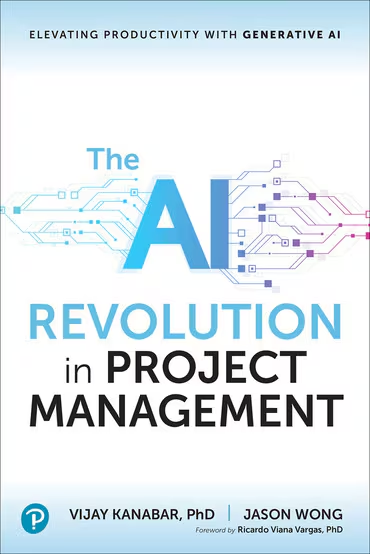
Co-author of The AI Revolution in Project Management (2023, PMI-endorsed). Foreword by Ricardo Viana Vargas, PhD.
Invite me to speak or train your teamLet's talk about what AI could do for your organization.
Available for senior leadership and advisory roles. Résumé on request.